

All operators of motorized pleasure craft are required to show proof of operator competency. All you need to know for the Transport Canada test is presented in an easy-to-read format that is both informative and entertaining. You can be confident that this study guide meets all the standards established by Transport Canada’s Office of Boating Safety. As an extra benefit, if you pass the test offered by Canadian Power and Sail Squadrons, your Card is recognized by BOTH Transport Canada and The National Association of State Boating Law Administrators (USA).
Suggested Prerequisite: None
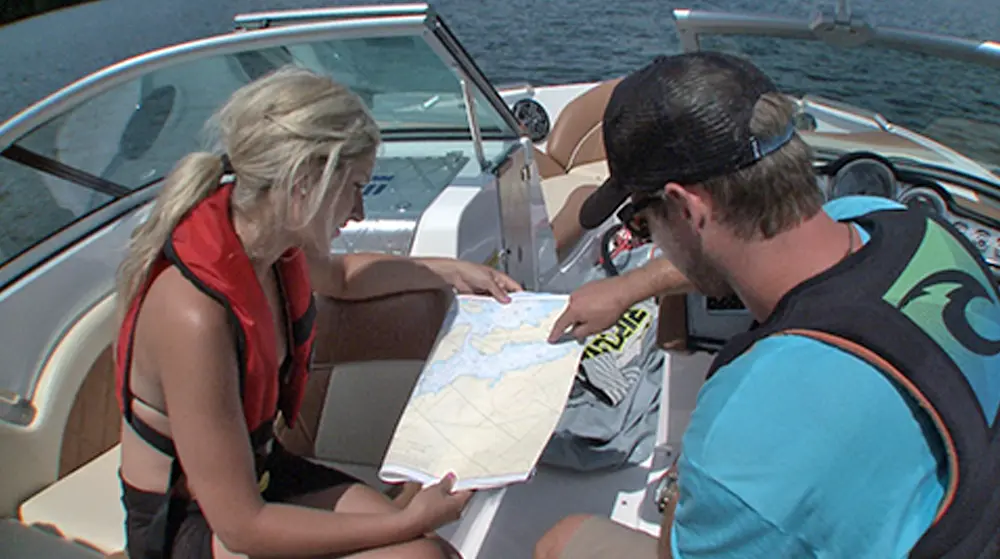
Learn the fundamentals of boat handling and safety techniques, including skipper and crew responsibilities, preparing for departure, handling emergencies, anchoring techniques, lines and knots, docking and undocking techniques, marine weather, collision avoidance rules, and tide and current tables. Each section includes course notes, which can be downloaded electronically or printed in booklet format, instructional videos, skill-testing quizzes and practice exercises, and links to supplementary resources, including web-based links and videos related to each topic. The course, which can be taken online/virtual or in a classroom (where available), is 7 to 8 weeks in length (at the discretion of the instructor team). A final exam is also available.
Suggested Prerequisite: Pleasure Craft Operator Card (PCOC)
Learn the fundamentals of traditional and electronic navigation, including navigation using paper charts and electronic devices (e.g., a chart plotter and app-based software). Each section includes course notes, which can be downloaded electronically or printed in booklet format, instructional videos, skill-testing quizzes and practice exercises, and links to supplementary resources, including web-based links and videos related to each topic. Participants must complete the cruise exercises with a chart plotter or tablet/phone navigation app. The course provides options for purchasing apps starting at $14.00. The course, which can be taken online/virtual or in a classroom (where available), is 8 to 9 weeks in length (at the discretion of the instructor team). A final exam is also available.
Suggested Prerequisite: Pleasure Craft Operator Card (PCOC)
Take the next step in boating safety courses. This course will be taught weekly with an instructor and lecture covering the topics: traditional and electronic navigation - navigating with paper charts and electronic devices (example, a chart plotter and app-based software). Boat handling subjects include operator and crew responsibilities, handling emergencies, anchoring techniques, docking and undocking techniques, marine weather, collision avoidance rules, and tide and current tables. Self-marking quizzes and charting exercises allow participants to practice and test what they learn. Each section includes printable course notes, instructional videos, skill-testing quizzes. An electronic navigation device is required to participate in this course. If you do not have one, you may purchase a phone navigation app starting at $14.00.
Suggested Prerequisite: Pleasure Craft Operator Card (PCOC)

This course will increase your confidence by focusing on the manual navigation technique called Dead Reckoning followed by logbook protocols. This is followed by a review of fixed and floating aids and more detailed navigational techniques. Other chapters will increase your knowledge of environmental influences on the marine environment: Tides and Currents, Weather, and Wind and Waves. Still other chapters are devoted to specific procedures to follow when things go from bad to worse: skills for boating handling during adverse weather, managing emergencies, and coordinating rescue efforts with the Coast Guard. Finally, you must demonstrate your proficiency in tying various knots and splices. The exam includes an extensive quiz section and charting/cruise exercise testing your understanding of all topics covered in the course.
Details: Students will receive printed copies of the course material either by mail or by picking them up at a specific location. Instruction will take place using an online meeting one day per week (2-3 hrs.). This course begins and ends on a specific date. The final examination will be at a location near you or in some cases the examination may be online.
Suggested Prerequisite: Basic Navigation and Boat Handling

Keep the water on the other side of the wall! From spark plugs to bottom paint, this course covers all the basics for “do-it-yourself” boaters. This course will equip you with the knowledge required to prevent onboard problems, carry out specialized tasks and tackle both short-term troubleshooting as well as long-term boat care. It features practical information and handy tips suitable for both new and existing boat owners. The dream of owning, maintaining and using your own boat without great expense can be achieved through the completion of the Boat & Engine Maintenance Course.
Details: Students will receive printed or electronic copies of the course material either by mail or by picking them up at a specific location. Instruction will take place using an online meeting one day per week (2-3 hrs.). This course begins and ends on a specific date. The final examination will be at a location near you or in some cases the examination may be online.
Suggested Prerequisite: None
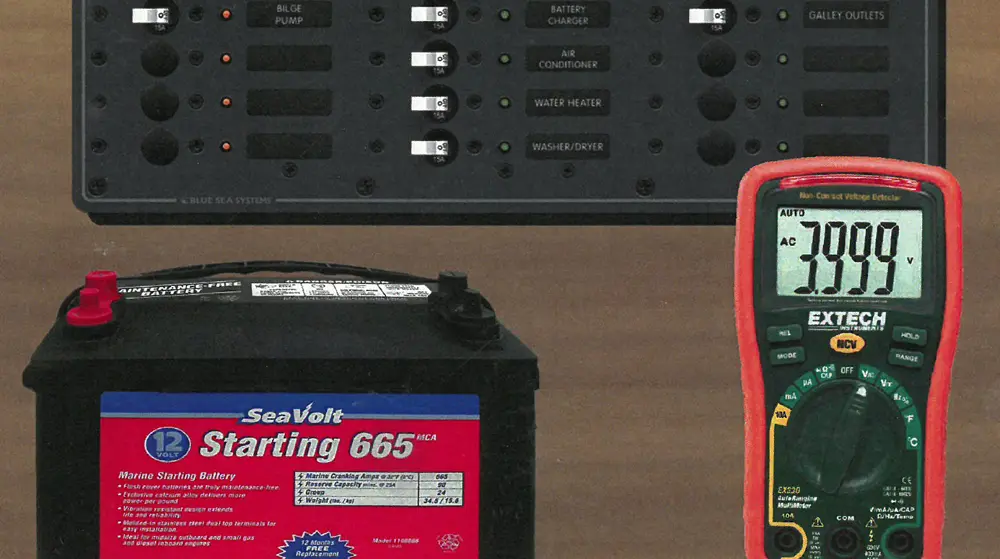
Learn how to maintain electrical systems in your boat properly and safely. Gain a solid foundation in wiring, direct current systems, and alternating current systems found on recreational vessels. It also covers galvanic and stray current corrosion, lightning protection, interference suppression and electrical troubleshooting. Learn how to maintain electrical systems in your boat properly and safely. Enroll in the Marine Electrical Maintenance Course with your local Canadian Power and Sail Squadron, because PEACE OF MIND IS PRICELESS!
Details: Students will receive printed or electronic copies of the course material either by mail or by picking them up at a specific location. Instruction will take place using an online meeting one day per week (2-3 hrs.). This course begins and ends on a specific date. The final examination will be at a location near you or in some cases the examination may be online.
Suggested Prerequisite: None
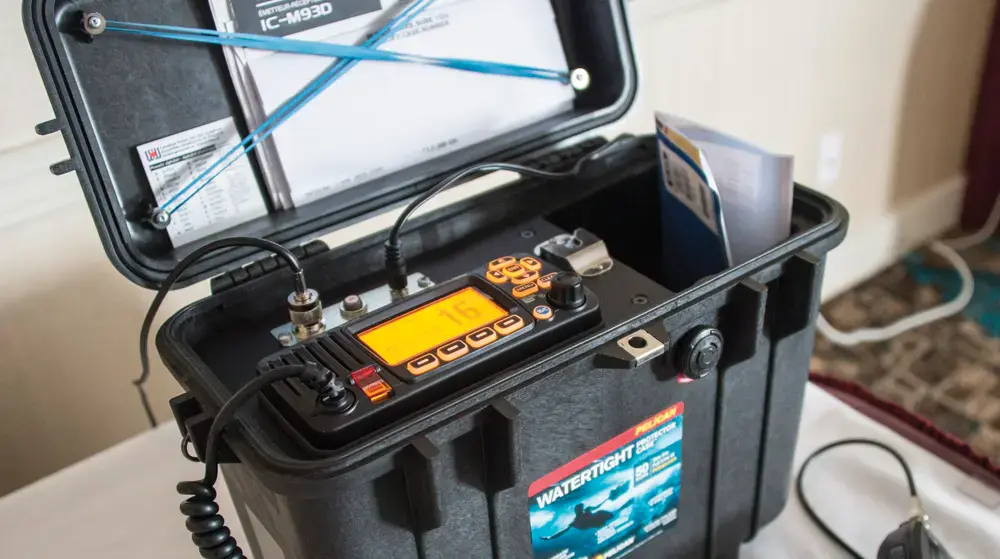
The Maritime Radio course teaches emergency radio procedures and everyday operating techniques. Learn all about the uses of marine radios, choice of frequencies, operation, phonetic alphabet, procedural words and phrases, as well as Digital Selective Calling and the Global Maritime Distress and Safety System, (DSC/GMDSS). All mariners, including recreational boaters, will want to take advantage of the many features and capabilities of this innovative form “automatic” radio. Secure your lifeline. Be sure that you and your family take the Maritime Radio course. This complete package will prepare you for the Restricted Operator Certificate (Maritime) with DSC Endorsement exam which is included as part of this course. To operate a maritime radio, you need the certificate. It’s the law!
Details: Students will meet in a classroom either 1 evening per week or for an all-day course on the weekend. Printed course material will be distributed to the students. Students will write the examination at the end of the course. If the student passes, they will receive a temporary certificate.
Suggested Prerequisite: None
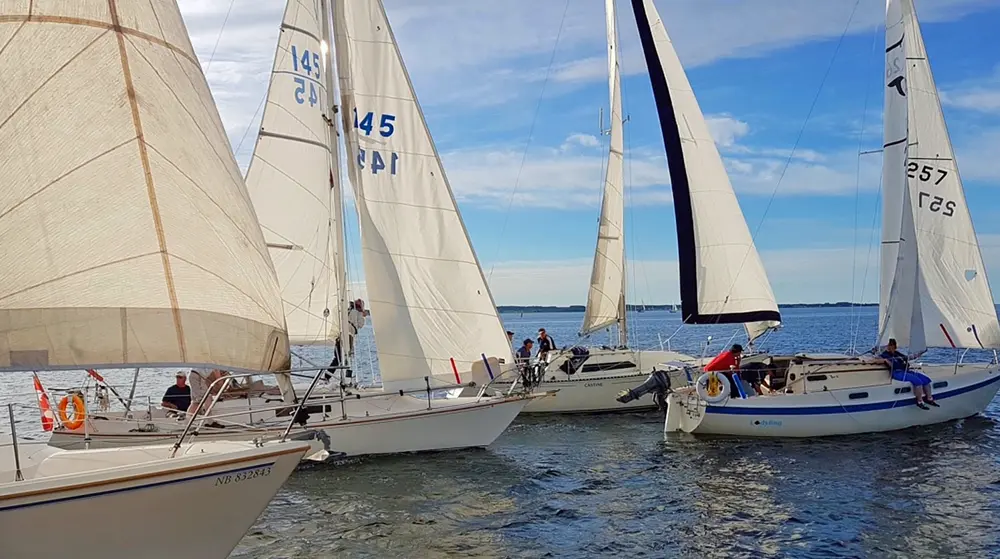
Do you want to learn more about sailing? Do you want to improve your sailing skills and your understanding of how sails work? This Sailing Course covers the practical and theoretical basics of sailing and sailing seamanship. The range of topics is broad: from a description of different sailboat rigs, sail plans, hull types, and rigging to stability, balance, and the physics of sailing; from sailing at different points of sail to handling heavy weather and storm conditions; from spinnaker handling to reefing; from leaving the dock to mooring and anchoring. It also covers sailing safety, navigation rules, and sailing tactics Whether you are a new sailor or are an experienced sailor and want to increase your sailing knowledge and skills, this course is for you.
Suggested Prerequisite: Basic Navigation & Boat Handling

Find out more about boating safety tips, and videos on essential boating knots and battery maintenance.

All course training is carried out by dedicated volunteers. Our Oakville instructors are experienced sail and power boaters whose passion is to increase safety and confidence on our waterways through education.

A discount of 25% applies to a First Year Membership if requested within 60 days of the student’s marks submitted after completing a CPS-ECP course.


